Year In Review 2025

A Note From Our Executive Director
Late last year, we hosted a summit at Allen Family Philanthropies that brought together the six grantees from our recent Pacific Northwest-focused natural climate solutions RFP. Scientists and practitioners from Alaska, British Columbia, Idaho, Oregon, and Washington - who would likely not have met otherwise - gathered to talk about their projects. The energy in the room was nothing short of electric. When we selected these grantees in early 2025, we did so because we believed each project was a powerful, community-driven natural climate solution, ready for implementation in the Pacific Northwest. What we didn’t anticipate was the creative possibilities of like-minded leaders from different landscapes, scientific fields, and communities coming together to compare progress and share early insights about their work.
At one point, I looked across the room at scientists working on a kelp farm off the Alaskan coast deep in conversation with a team experimenting with new crop varieties on the Eastern Washington prairie. After lunch, scientists at two different organizations were swapping stories about flood plain restoration and soil carbon capture techniques. These grantees were discovering shared challenges, swapping wisdom, and sparking ideas. It was a moment that reminded me that we weren’t simply gathering project updates—we were facilitating the formation of new communities in real time.
In 2025, AFP distributed a total of $59M to 136 organizations. 55 new grants were approved, totaling $36M. While individual grants support an organization’s unique mission and ability to drive change, we have experienced additional success focusing grantmaking around “initiatives,” such as funding geographically or connecting thematically-likeminded organizations which might be doing things differently but are all pushing toward a similar outcome. It leads to stronger networks of shared knowledge, cross-sector collaboration, and the potential for new, unique, and exciting partnerships.
Arts and culture organizations with shared vision can and should create intercity and interstate networks of shared knowledge connecting programs and communities in overlapping circles. Empowering youth with leadership opportunities equips them with skills for school, work, and life; some forge new paths, while others return to contribute to their communities. And when we strengthen the health and biodiversity of our natural world, we nurture the co-benefits of a healthier Earth.
When each of us does our part and does it through mindful connection and communion with others – whether a scientist, an artist, or a young person, it lays the foundation for collective wellbeing. Together, we are all creating a future where communities of creativity, youth, and nature can flourish throughout the Pacific Northwest and beyond.
It has been an important year for fostering connection here at Allen Family Philanthropies, and we want to take time to reflect on a few examples of incredible people and organizations who understand that we are not in this alone.
Lara Littlefield, Executive Director, Allen Family Philanthropies
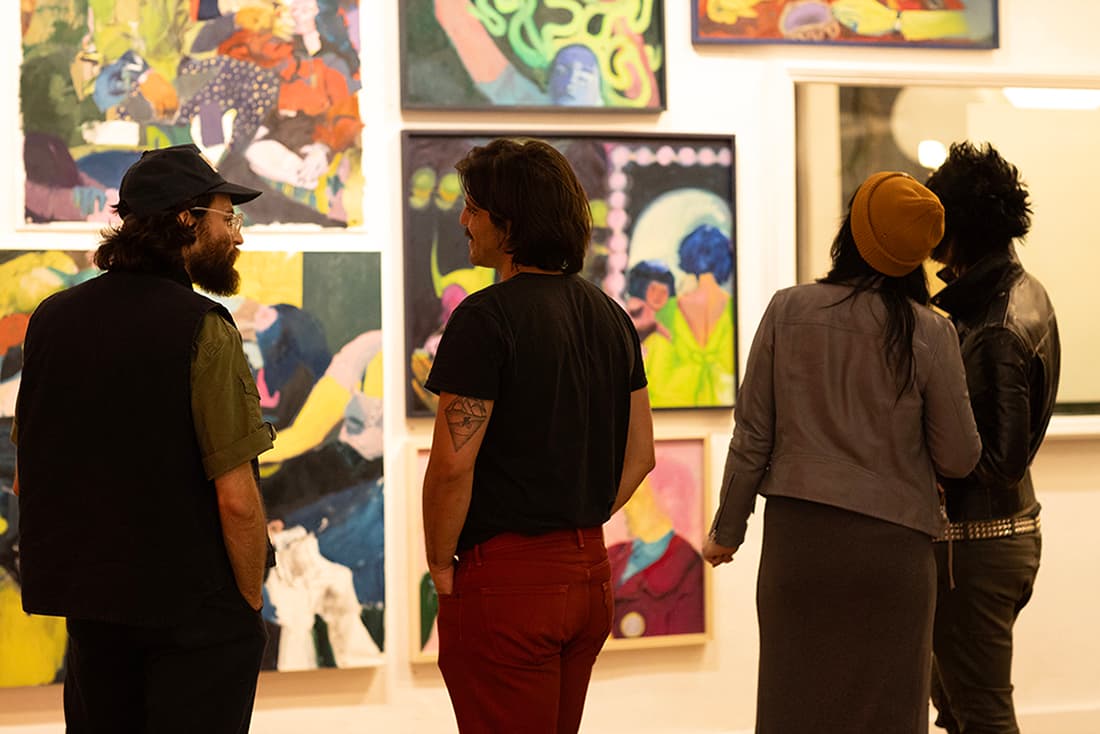
Supporting a Creative Network of Working Artists
We believe that arts and cultural experiences contribute to a deeper understanding of ourselves and others, helping to foster connections and strengthen communities. Our grantees engage with and celebrate the human experience of art.
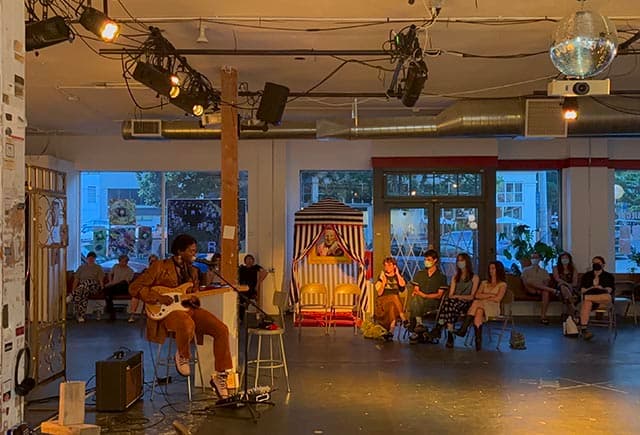
For a decade, Common Area Maintenance (CAM) has established itself as a hub for creativity in downtown Seattle, fostering a place where artists and creators build community and realize their ideas and craft. This year marks notable growth for CAM, welcoming new writers and artists and activating a vibrant new venue, Common OBJECTs, which bustles daily with performances, readings, workshops, and a dynamic mix of creatives at work.
"What stands out about Seattle is the generosity of the people who make up this arts community. When you ask for help, people show up. That kind of trust makes the work feel less lonely and much more like something we are building together with the city." - Timothy Firth, Co-Founder, Common Area Maintenance
At its core, CAM thrives on relationships and connection, which is central to its mission, offering a space for artists to develop together in an increasingly fragmented world. As a member of a cohort of downtown Seattle arts organizations that received funding from Allen Family Philanthropies last year, CAM collaborates and exchanges knowledge with others, further strengthening the city’s rich artistic legacy. The impact on working artists at CAM is a testament to the power of connection.
"I love being a part of a community of artists...I’ve been thinking a lot about the loneliness epidemic and about how rare and important it is to have communities and spaces like CAM. Every month, CAM hosts a community potluck that is open to the public. One year ago, every person at the potluck would have been a stranger to me, but now that I’ve spent time in this community, I not only knew many more people, but I also had a better understanding of how all of these people related to each other. It made me appreciate that community is only possible when we have the space and the opportunity to show up for each other again and again over time." - Laura Zeng, Artist
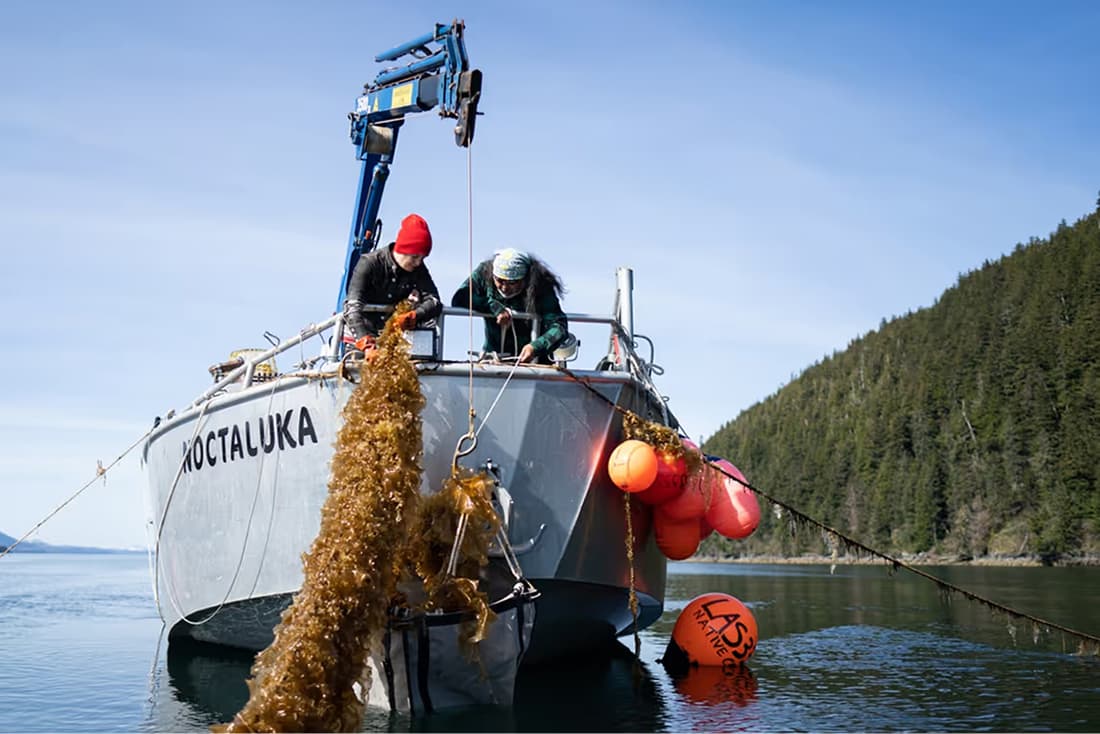
Connecting Coastal Communities Through Seaweed Farming in Alaska
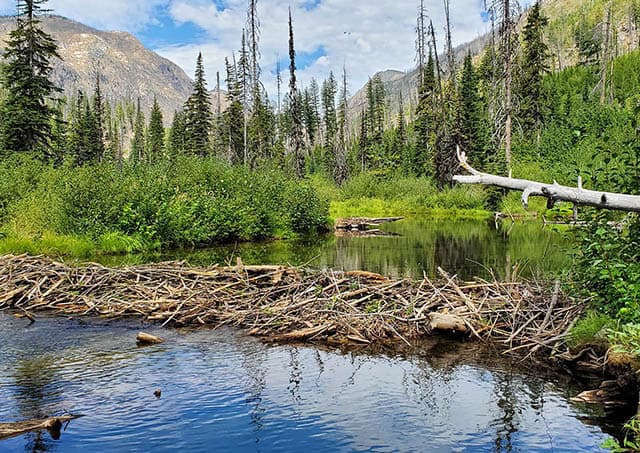
Community-based conservation with co-benefits for human well-being is a powerful tool to protect and restore the natural world. The Pacific Northwest is home to practitioners working at the forefront of natural climate solutions developed by and executed in partnership with the community. One such grantee, Native Conservancy, is assessing carbon cycling in seaweed and quantifying the climate, biodiversity, and economic benefits of Indigenous seaweed farming in coastal Alaska.
While the science focuses on developing the methodology for determining the rate, duration, and potential magnitude of carbon sequestration through seaweed farming, the core of this project is the connection between science that advances biodiversity efforts and a community whose livelihood and culture is deeply engrained with the coast. The project engages the community and builds economic viability all while utilizing resources that would otherwise be idle. The seaweed farming takes place in two coastal Alaskan regions – one outside of Kake and the other off the Metlakatla shore. Kelp farming is accomplished by working with the local fishing community; using their fishing boats to tend to the kelp farms during the fishing off season and timing farming and harvesting activities so they can be completed alongside (and not in competition with) the annual fishing season.
"The fisherfolk already have the infrastructure, and this is giving them more to do in the off season. So, they’re working throughout the year, and they’re saving the environment. I mean, how cool is that? We’re both pulling carbon out of the atmosphere and getting people paid. And then, when that season’s cycle is completed, everything is moved out and fishing commences." - Keolani Booth, Native Conservancy
The community is also employed to capture seaweed seed, manage nurseries, harvest seaweed, craft products, and collect data. Once the infrastructure and the seaweed arrays are in place, as more seaweed products are scaled, these actions will contribute to a more carbon neutral society.
"It’s not necessarily the kelp taking carbon out of the environment that’s going to be the driver of climate action here. It’s what we do with the kelp afterward. Kelp is getting turned into various products – for instance, food, cosmetics, agricultural fertilizers and additives that increase plant productivity. These can be a substitute for petroleum products and, thus, reduce carbon in the atmosphere." - Benjamin Saenz, Oceanographer
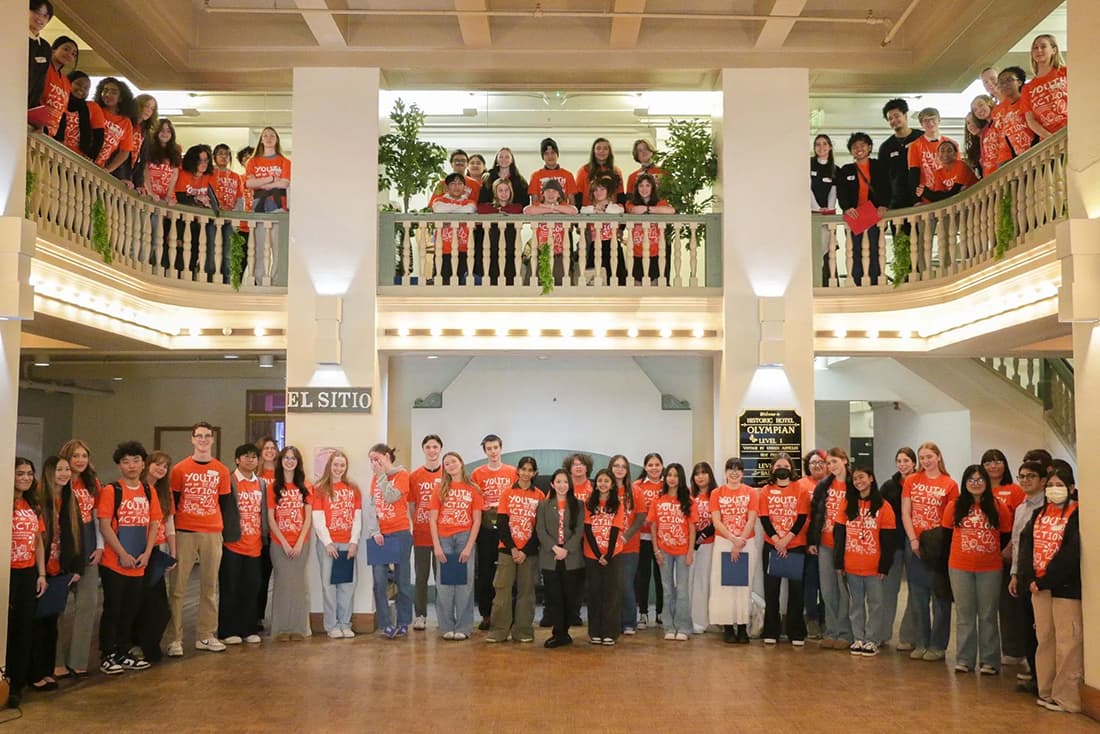
Empowering Washington Youth Embracing Civic Action
When we think of youth connecting with each other, we often envision students in classrooms, on teams, or in clubs. But grantee Washington Youth Alliance (WYA), a youth-led and designed network of young people, is supporting peer connection beyond traditional youth spaces; connecting youth across communities to make change on issues that directly impact them.
With 10 chapters across Washington, WYA fosters generational impact by building skills, community, and spaces for youth to mobilize around the topics they consider most urgent, from mental health to digital literacy to gun violence prevention and more.
"What remains consistent across our chapters, ranging from Bellevue and Renton to Moses Lake is that youth in every community want to be taken seriously as leaders and change-makers. We're learning that while implementation varies significantly (those in urban areas tend to focus more on policy education while those in rural communities tend to focus on organizing their communities for collective change), young people everywhere share the frustration of being dismissed because of their age. Our expansion from urban centers to rural communities has taught us that authentic youth leadership requires different support structures. In rural areas, being the only youth organizer in your school demands different resources than navigating dense urban coalitions. But we all come together on the issues that matter to us as young people; gun violence prevention, youth mental health, educational equity, and access to a healthier democracy." - Chetan Soni, Executive Director, Washington Youth Alliance
These youth-led WYA chapters combine organizing, leadership development, and community understanding, and they’ve proven that when young people connect and collaborate in their immediate communities and across the state, real change happens. Youth do not want or need to be told what they want - they know what they want!
"I would like adults to be aware of the power and determination that lie with and behind our voices. Students aren’t afraid to act in support of change, and adults shouldn’t try to suppress us. We speak from our experiences, and that’s something that can’t be stifled or minimized, but instead uplifted and empowered. With the Washington Youth Alliance, my chapter members and I have access to an extensive network of youth across Washington interested in the same topics and issues as us. Together, we are able to organize on multiple fronts across the state for causes that we believe in and are passionate about." - Abby Wu, co-president and founder of the Pullman Chapter of the Washington Youth Alliance
Throughout the past year, foundation grantees have continually demonstrated the transformative power of connection, whether through networks of artists and culture-bearers, community-minded conservation efforts, or youth-led civic action. By nurturing creative spaces, advancing community-based natural climate solutions, and empowering young voices, these organizations are strengthening our communities.
As we look ahead, we remain committed to continuing to center community in everything we support.