When Young People Lead: What We’re Learning About Youth Engagement in Washington State
By Olivia Thai, Program Officer at Allen Family Philanthropies
Young people thrive when they have meaningful opportunities to connect with one another and lead. At a time when many are experiencing deep social isolation and disconnection, creating spaces where youth can build relationships and take action on issues they care about is essential. Allen Family Philanthropies invests in young people as changemakers. We believe that when youth are supported with leadership skill development, opportunities to take action, and supportive intergenerational partnerships, they can expand what’s possible for themselves and their communities.
Statewide Funding Opportunity
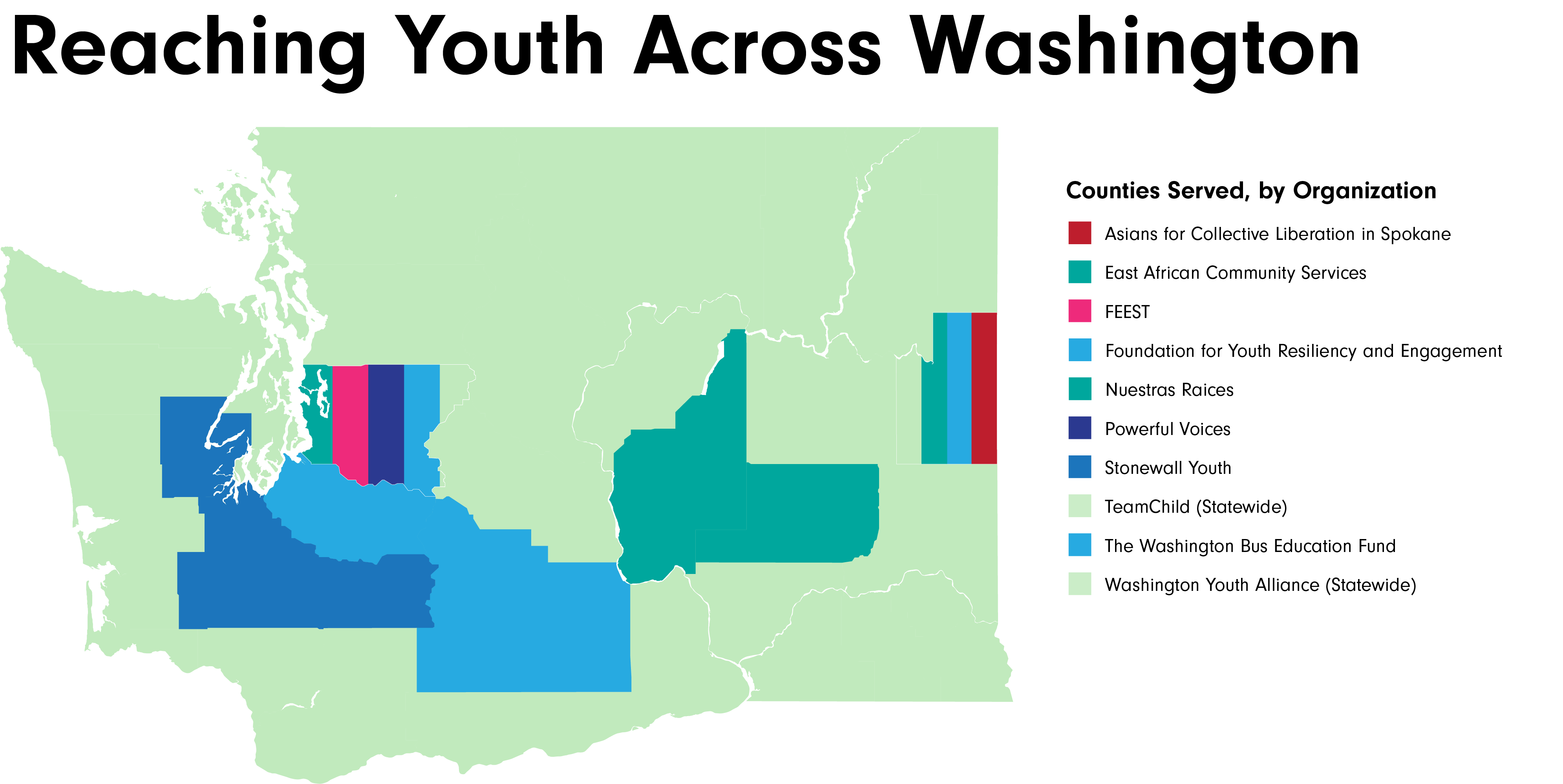
In the past ten years, we have Invested $16.5 million toward youth-related initiatives. In 2024, we launched an open call for organizations supporting youth leadership across Washington State and awarded $5 million to 10 organizations; these grantees reflect the geographic, cultural, and programmatic diversity of youth engagement work across the state. Beyond grantmaking, we are convening these organizations over the next three years to support shared learning, skill building, and collaboration. By strengthening relationships across the cohort, we aim to help build a more connected and resilient ecosystem for youth engagement and youth organizing statewide.
Understanding the Landscape
In supporting a more connected and collaborative funding cohort, we also want to hear more broadly from those working in youth engagement and youth organizing across Washington. We partnered with the Funders’ Collaborative on Youth Organizing (FCYO) and Moon Snail Consulting to conduct a landscape scan of youth leadership and organizing in Washington. We surveyed more than 130 organizations and held in-depth focus group conversations with our grantees. Here is what our findings are helping us think about our work moving forward
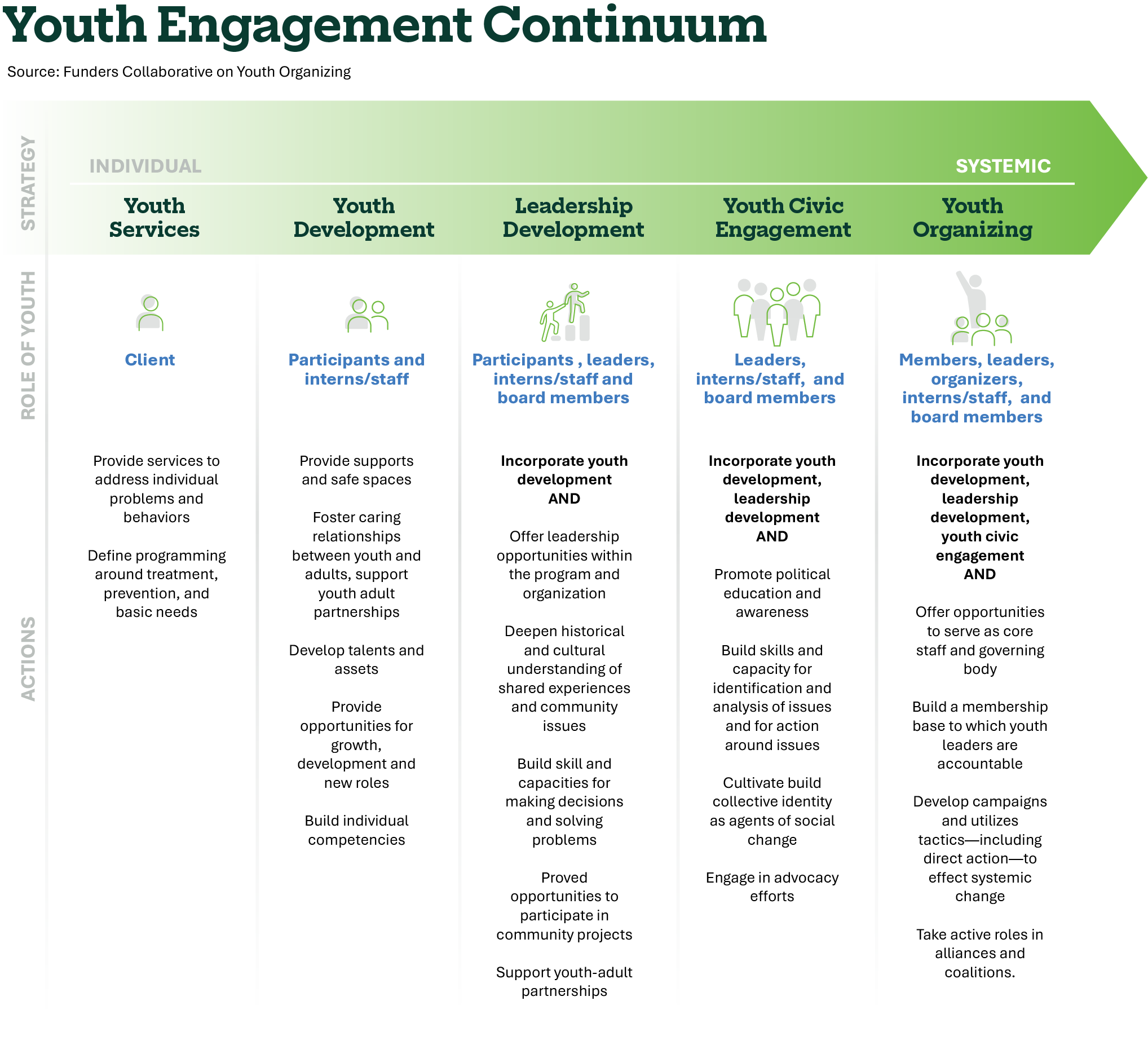
Youth organizing is an emerging field. The field is relatively young in Washington – 82% of surveyed organizations were founded after 2000, and nearly half (47%) were established after 2010. When asked to place their organization's work along the Youth Engagement Continuum responses revealed that many are offering youth leadership and civic engagement programs but only a small number are actively doing youth organizing work at this time.
Geography impacts access to youth engagement and organizing opportunities. Youth programs are concentrated in urban areas, leaving rural youth with fewer pathways to get involved. While cities like Seattle may have multiple organizations serving a single neighborhood, rural counties often rely on a small number of organizations covering vast regions and diverse needs. These localized differences mean youth leadership and organizing often look different across the state and require tailored, place-based approaches to ensure that youth have access to opportunities to get engaged in their communities and develop leadership skills.
Washington is rich in youth programs, but lacking in coordination. The state does not currently have strong statewide networks to support the broader youth development field. In recent years, organizations that brought youth development professionals together for professional development and collective advocacy have closed, and their absence is felt across the field. In our survey, organizations consistently expressed a deep desire to connect with others doing similar work, but noted that a lack of staff capacity made this challenging. Building the collective power needed to strengthen youth organizing statewide will require intentional investment in bringing organizations together.
Our Path Forward
What does youth leadership look like in practice? The work of our grantees are powerful examples of what’s possible when young people are empowered to lead. One grantee, FYRE: Foundation for Youth Resiliency and Engagement, serves the youth of Okanogan County, a large rural county with a dispersed population. FYRE succeeds at putting the power and decision-making in the hands of the youth participants. Young people identify their needs, while adult staff provide support and guidance. Recently, FYRE’s youth leaders identified a lack of accessible information about reproductive and behavioral health resources for young people in the county. In response, they collaborated with community partners to research available services and published an Okanogan County Teen Survival Guide; over 1,500 guides have since been distributed to schools, clinics, and social service agencies across the county.
In Seattle and South King County, FEEST has grown from its roots in food justice into a powerful youth-led organizing organization focused on systemic change in schools. What began with weekly community dinners, bringing young people together around preparing and sharing healthy, and culturally relevant food has evolved into a program model that centers young people in building collective power and transforming their school systems. We know we don’t have all the answers—and that’s intentional. Targeted research combined with ongoing coordination with current grantees gives us a clearer understanding of the current state of youth development and youth organizing in our state.
By better understanding the current ecosystem, we hope to ask more meaningful questions, build stronger relationships, and increase our partnerships with organizations and young people leading this work every day.