The Palouse Prairie restoration efforts incorporate the Coeur d’Alene Tribe’s rich history with a hopeful future
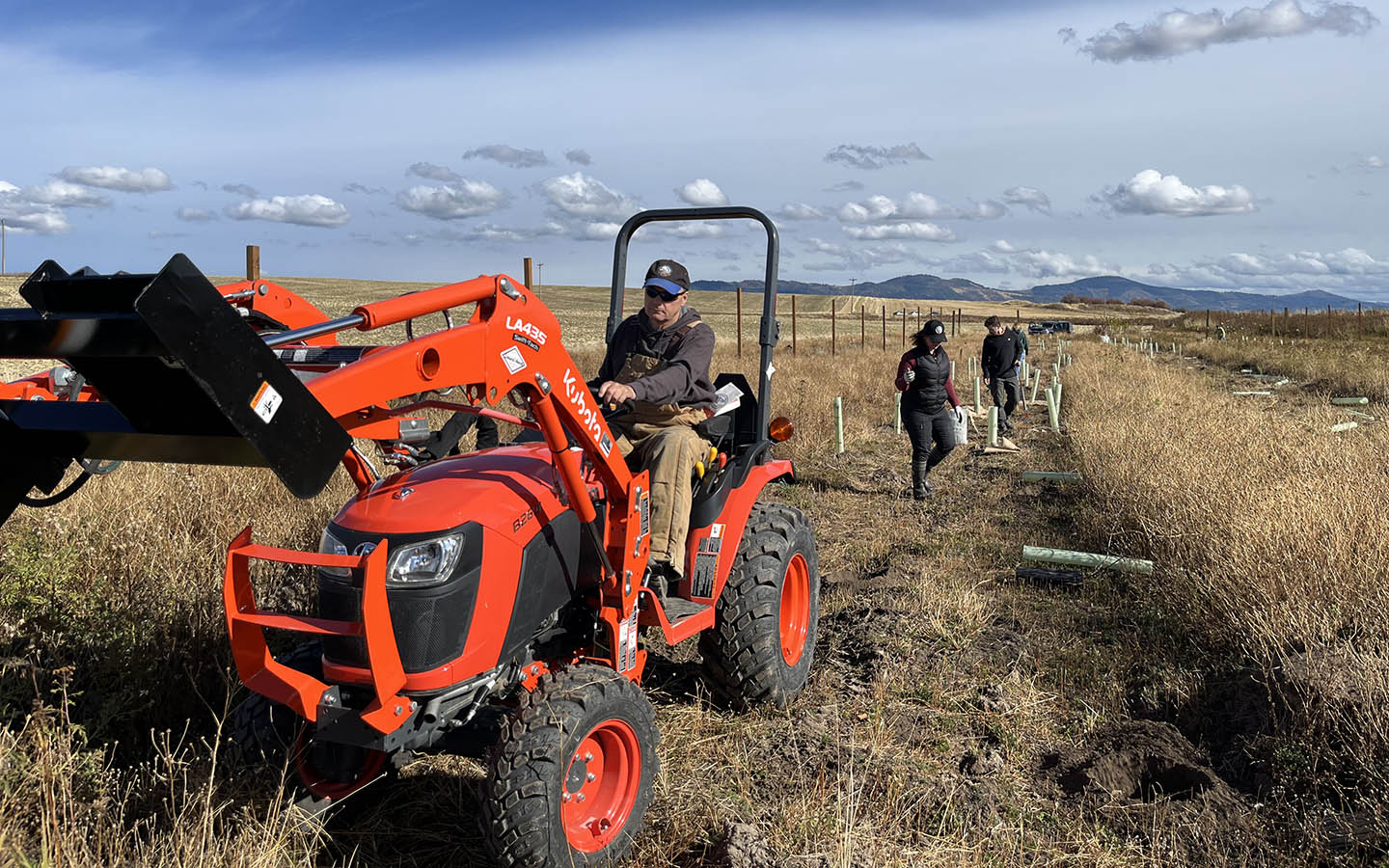
For the Coeur d’Alene Tribe, the Palouse prairie has always been a keystone of their history. The prairie inspired important oral stories like the story of Rabbit and Jackrabbit, whose hospitality and care for one another reflects the Tribe’s values and teachings even today. It’s also home to camas, a staple plant in the dietary, emotional, and social fabric of the community. But the once diverse native plants species that figured so prominently in the culture and day-to-day life of the Tribe are now threatened by centuries of ecological loss due to climate change and commodity agriculture. Now, the Tribe is leading a restoration effort that incorporates their rich history with a hopeful future, using natural climate solutions (NCS) to address the damages of the past two centuries.
NCS are intentional, nature-based actions that reduce or capture greenhouse gas emissions by protecting, restoring, and managing forests, wetlands, grasslands, oceans, and agricultural lands. Because they work with natural systems, NCS not only address existing emissions but also enhances biodiversity and the health of the surrounding environment. Coeur d’Alene Tribe’s restoration of the Palouse Prairie is a strong example.
“From our perspective, our land’s native ecology is wholistic and, when restored, can heal itself moving forward,” says Caj Matheson, Councilman of the Coeur d’Alene Tribe. By encouraging the regrowth of once-thriving native prairie plants using seeds from the Liberty Butte remnant prairie, the Tribe is helping these landscapes rebuild a diverse, resilient ecosystem. The result is a true win-win.
Laura Laumatia, Ph.D. – an Environmental Programs Manager for the Coeur d'Alene Tribe Natural Resources Department – talks about the possibilities the Tribe’s reacquisition of the grasslands around Liberty Butte, and how it could help them further their Palouse restoration efforts: “What the Tribe’s reacquisition of [Liberty Butte] has done is enabled us to think about the biodiversity on that site, how can we learn from that biodiversity, and how can we literally use these beautiful flowering plants that had medicinal and cultural significance? Can we harvest that seed and use it as the Tribe’s reacquiring some of these farmlands, and convert it back into this rich, diverse grassland that existed 200 years ago?”
The restoration project will sequester carbon through the growing of native Palouse plants, as well as new crops like Kernza, that return carbon caused by commodity agriculture back to the soil and also slow erosion.
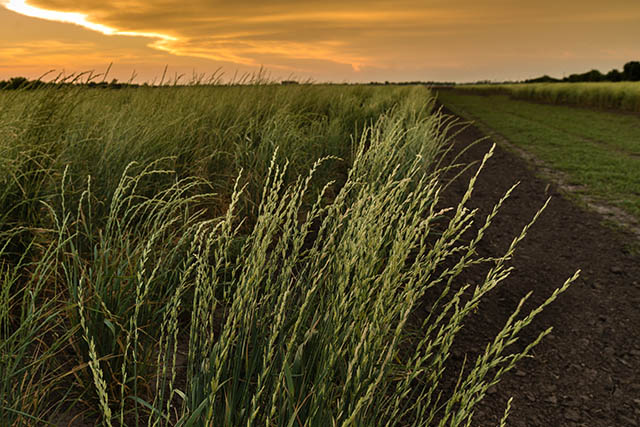
According to The Land Institute, Kernza is a grain produced from wheatgrass, native to western Asia and a perennial “cousin” of wheat, historically grown in the U.S. and across the globe to feed livestock.
Danielle Ignace, Ph.D., – an Associate Professor at the Department of Forest Resources at University of Minnesota and member of the Coeur d'Alene Tribe – expands on the benefits of Kernza. “Because it is a perennial, we don’t have to harvest and replant every year, we don’t lose out on losing so many nutrients. There’s so much great potential to store carbon here simply through the uptake of CO2 from the atmosphere into the plant via photosynthesis. So then we get more biomass, more carbon that’s stored here, more stability to the soil’s structure, and it helps to retain those nutrients within the system.”
Kernza can grow roots up to 10 feet deep and is sustainable without tilling even during harsh winter months. The proof? It’s considered a viable crop in the Midwest, surviving the region’s bitter winters and dry springs, and making it a key contender to replace those seasons’ vulnerable white wheat.
“Our partners at Salmon-Safe and at the Land Institute are eager to work with us on the viability of Kernza in the Pacific Northwest. We have planted the first Kernza in Idaho, and our learnings about the benefits and challenges of this crop will inform the region. If viable, this new crop will add to the economic diversity within the agricultural community.”
Matheson hopes if successful, the Palouse prairie can lead as an example of how to restore native prairie in other areas as well. “[We want to start] sharing our results...and hopefully demonstrating the viability of both an alternative perennial grain, and the benefits of protecting and restoring native prairie wherever possible.”
The Tribe’s new partnerships with Salmon-Safe and the Land Institute, as well as their existing research partnerships with climate scientists and ecologists at UI and University of Minnesota have been strengthened because of recent grants. With deep expertise in prairie restoration using NCS and hands-on experience with the new crop, the Tribe is well positioned to lead and support farmers and landowners interested in crop diversification.
Restoring the prairie with Kernza not only is an economically sound method of protecting and enriching this historically and culturally rich land, but it does it in a way that works with, not against, the existing environment—grounding NCS in the community’s values of reciprocity and long-term care for the land.
Matheson is optimistic that the Palouse prairie restoration project can build momentum in the area, and perhaps even a larger-scale rethinking of the prairie’s ecosystem loss—one where climate mitigation, cultural restoration, and agricultural innovation are not competing goals, but mutually reinforcing outcomes.
“This funding has allowed us to address gaps in capacity here, and do something that helps move us towards our overarching goal of restoring ecosystem function to pre-colonial conditions.”