Allen Family Philanthropies awards $8 million for science-driven conservation projects
SEATTLE – January 13, 2026 – Today, Allen Family Philanthropies (AFP) announces an $8 million investment in nine science-driven conservation projects to benefit species and protect ecosystems across the United States. These projects, selected in late 2025, comprise the third year of grants awarded under the Partnership to Advance Conservation Science and Practice (PACSP), a joint effort between AFP and the U.S. National Science Foundation designed to catalyze deep collaboration between researchers advancing basic science and on-the-ground conservation partners.
Each PACSP project addresses critical knowledge and data gaps that enable greater impact for understanding and protecting species and ecosystems. The projects funded in this third year of the program have far-reaching implications for biodiversity and conservation, policy and the economy.
“This unique partnership fosters valuable collaboration between academic institutions and conservation organizations to address pressing biodiversity challenges,” said Lara Littlefield, executive director of Allen Family Philanthropies. “The on-the-ground results of the program's previous grants show great promise as we connect rigorous scientific theory and research with frontline conservation applications.” The nine 2025 PACSP projects and grantees receiving funding from AFP for conservation implementation are:
Predicting the feeding patterns of endangered baleen whales in Massachusetts Bay to help prevent whale-vessel collisions | International Fund for Animal Welfare
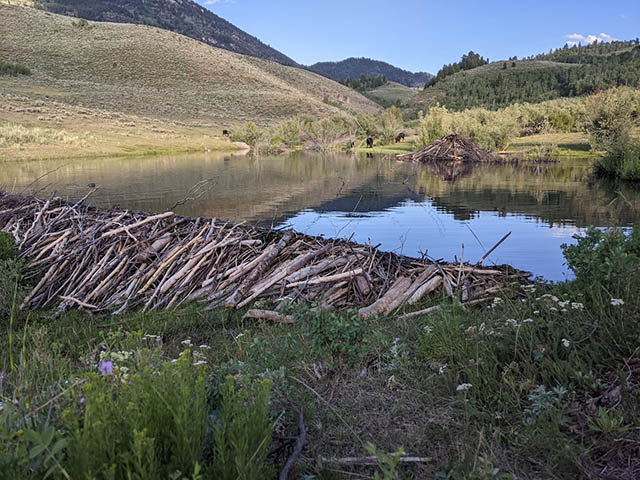
Analysis of beaver-based restoration efforts on stream ecosystems to inform region-wide stream restoration efforts | The Nature Conservancy
Collecting a comprehensive dataset on plant-pollinator interactions of bees in northeastern forests to guide targeted understory restoration plantings in forests managed for tree diversity to increase forest bee abundance and diversity | The Xerces Society for Invertebrate Conservation
Examination of mate choice behavior and personality traits of declining New England cottontails to determine pairings that can survive in the wild | U.S. Fish and Wildlife Service, New Hampshire Fish and Game Department, Queens Zoo and Roger Williams Park Zoo
Large-scale habitat and bird surveys in Chesapeake Bay tidal marshes to create a guide for ecosystem restoration as part of the Audubon-led Marshes for Tomorrow Initiative | National Audubon Society
Assessment of fire management approaches on fungal biodiversity to provide recommendations for fungal conservation and oak savanna restoration | Michigan Nature Association, Midwest American Mycological Information and Mycota
Measuring the effects of outbreeding in Chiricahua Leopard Frogs to shape best practices for genetic rescue | Arizona Game and Fish Department, American Museum of Natural History and Turner Institute of Ecoagriculture
Implementation of river and stream flow models focused on benefits to ecosystems and water users in the Intermountain West | University of New Mexico, University of Massachusetts Amherst, World Wildlife Fund and National Audubon Society
Researching soil biodiversity recovery and mycorrhizal restoration to promote ecosystem function on former agricultural land | Savanna Institute
Established in 2023, PACSP is a partnership between AFP and the U.S. National Science Foundation that has now provided a total of $40 million for 25 projects across the nation. Previously funded projects from 2023 and 2024 also focused on diverse ecosystems and species, including ecosystem engineers like desert tortoises, key environments like the mid-Atlantic system of barrier islands, and phenomena affecting the entire nation like wildland fire and wildlife disease. Each PACSP project extends basic science into on-the-ground conservation to address critical knowledge and data gaps, enabling greater real-world impact for the United States. A Q&A with Dr. Yuta Masuda, director of science for Allen Family Philanthropies, is available HERE with more information about the PACSP program.
View full 2025 project summaries HERE and download media materials and photos HERE.
###
About Allen Family Philanthropies
Founded in 1988 by Jody Allen and the late Paul G. Allen, co-founder of Microsoft, Allen Family Philanthropies (formerly known as the Paul G. Allen Family Foundation) invests in communities across the Pacific Northwest and beyond to strengthen arts and culture, empower the next generation of changemakers, and support a global network of partners working to advance biodiversity and human well-being. Learn more at www.allenphilanthropies.org.